
This post covers what to do when you get a tick bite.
In September of 2025, I returned from solo backpacking on the North Country Trail in Wisconsin with two attached deer ticks. I have a history of infections triggering my Mast Cell Activation Syndrome (MCAS) from Lyme disease and co-infections, so I took the situation seriously.
Remarkably, I have solo backpacked over 1200 miles in the last year and a half, and never once had an embedded deer tick until now. Follow along to find out what to do when you get a tick bite.
As an Amazon Associate, I earn from qualifying purchases.
Table of Contents
Who is Betsy Leighton?
I’m a writer, blogger, and healer dedicated to helping individuals reconnect with their innate peace and wholeness by healing nervous system dysregulation. My personal experience with chronic illness called Mast Cell Activation Syndrome (MCAS) shapes my work, and my content offers tools to empower those with chronic illness to improve their well-being and take charge of their health.
I created the Sacred Self-Healing Method and am a trained and certified Safe and Sound Protocol provider, an author, blogger, and A Course in Miracles Teacher. I hold a Master of Divinity in Spiritual Counseling and am a trained spiritual mentor, with certificates in sound healing, aromatherapy, nutrition, and Sacred Deathcare. I offer a self-study certificate program in the Sacred Self-Healing Method, provide spiritual counseling and coaching, courses, and supported subscriptions for the Safe and Sound Protocol.
What is MCAS?
Mast Cell Activation Syndrome (MCAS) is a chronic condition that affects all organ systems. It can cause severe, disabling symptoms every day, including potentially fatal anaphylaxis.
The common triggers for MCAS are infections, toxic exposures including mold exposure and EMFs, trauma, concussions, and stress.
MCAS often occurs with other chronic conditions like Ehlers-Danlos Syndrome (EDS) and Postural Orthostatic Tachycardia Syndrome (POTS). Managing MCAS is challenging because many healthcare providers are unaware of it, and diagnostic tests can be unreliable. Treatments include antihistamines and mast cell stabilizers in the form of medications and supplements, along with avoiding triggers. Check out this post on managing MCAS.
Remove the tick promptly and properly
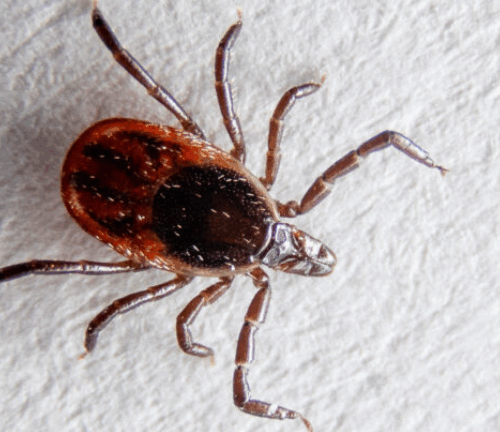
I pulled two nymph deer ticks off my legs the morning after I returned from my trip. They were so small I had missed them when I did several tick checks both on the trail, and immediately after I got home. I even missed them while I was taking a bath.
Here’s how to safely remove ticks:
- Use fine-tipped tweezers or a tick removal tool.
- Grasp the tick as close to the skin’s surface as possible.
- Pull upward with steady, even pressure. Don’t twist, jerk, or squeeze the tick’s body.
- If the mouthparts remain, you can try to remove them with clean tweezers; if you can’t, don’t worry about it and let the skin heal.
- Place the tick(s) in a small ziplock bag.
- If you want to know if the tick(s) carry vector-borne illnesses, you can mail them to TickCheck. (I’m not affiliated with them.)
I didn’t realize it at first, but removing ticks as close to the skin’s surface as possible helps prevent squeezing the tick’s body. Squeezing can cause the tick’s contents—such as bacteria or pathogens—to be pushed back into your skin. If the tick is infected with a vector-borne illness, this could increase the risk of transmission.
Check for skin rash
Not all ticks carry vector-borne illnesses, and even if they do transmit Lyme Disease to you, you may not develop a skin rash. The characteristic bull’s-eye rash associated with Lyme Disease only develops in 20% of cases. I checked the area where the ticks had been removed daily for several weeks to see if a rash developed, but I didn’t notice one. I never had a rash from my prior infections, and I knew not to use that as the sole indicator of reinfection.
Know your tick(s)
You can look up photos of the types of ticks that carry disease online. Here is a quick breakdown of which ticks carry which vector-borne diseases:
| Testable Pathogen | Associated Disease |
|---|---|
| Blacklegged Ticks & Western Blacklegged Ticks | |
| Borrelia burgdorferi | Lyme disease |
| Anaplasma phagocytophilum | Anaplasmosis |
| Babesia microti Babesia duncani | Babesiosis |
| Bartonella henselae Bartonella spp. | Bartonellosis |
| Mycoplasma fermentans Mycoplasma spp. | Mycoplasmosis |
| Borrelia miyamotoi | Relapsing Fever |
| Lone Star Ticks & Gulf Coast Ticks | |
| Ehrlichia chaffeensis Ehrilichia ewingii | Ehrlichiosis |
| Francisella tularensis | Tularemia |
| Borrelia lonestarii (Potentially) | STARI |
| American Dog Ticks & Pacific Coast Ticks | |
| Francisella tularensis | Tularemia |
| Ehrlichia chaffeensis Ehrilichia ewingii | Ehrlichiosis |
| Rickettsia rickettsii Rickettsia parkeri Rickettsia philipii | Rocky Mountain Spotted Fever |
| Brown Dog Ticks | |
| Rickettsia rickettsii Rickettsia parkeri Rickettsia philipii | Rocky Mountain Spotted Fever |
Clean the bite area
After removing the tick(s):
- Wash your hands, the bite site, and your tweezers with soap and water, rubbing alcohol, tea tree essential oil, or iodine.
- As soon as possible, apply one of the following topically to the area of the tick bite and an inch or more surrounding the bite. Reapply several times per day for several days after the area is clear: hyperchlorous acid for skin, antibiotic ointment, or rubbing alcohol.
I used zinc soap on my tick bites and then applied rubbing alcohol. Many tick care guides recommend using essential oils, but I have skin sensitivity due to MCAS, so that option isn’t open to me.
Start homeopathics
Immediately following a tick bite, or as soon as possible, start taking Ledum Palustre 200C (1M is preferred but more difficult to find). Boiron is a good brand for this. You can get 30C at most health food stores.
Take 3 pellets every 3 hours—starting immediately for best results—and continue for 3 days. Then follow your healthcare provider’s recommendations.
Start taking Energetix Bacteria-Chord to address the potential infection, and Energetix Lymph Tone II to facilitate detox and drainage.
Save the tick and have it tested
- Place the tick(s) in a sealed zip-top plastic bag or affix them firmly between two layers of clear tape.
- Label with the date and the location on your body where the tick was found.
- You can bring it to your local health department or send it for tick identification/testing if needed. I used TickCheck and had the results back in about 5 days.
Start antimicrobials
Start taking herbs or Doxycycline as soon as possible. I take an herbal blend called BioPure Cocktail because I’m unable to tolerate antibiotics. I tolerate BioPure Cocktail better than other herbal blends because it contains less sulfur.
Step 1: Start taking herbs or antibiotics ASAP after the bite, as recommended by your provider. If possible, begin on the same day as the tick bite.
Step 2: For herbals, take 5 drops for children and 10 drops for adults twice daily. Mix the herbs in 4-8 oz of water, and take them away from food for the best results.
Along with antimicrobials, I also take a binder to mop up any die-off caused by the herbs, such as 2 capsules of Activated Charcoal per day away from meals and supplements.
Watch for symptoms
Monitor your health over the next 30 days. Seek medical care if you develop:
- Rash (especially a bull’s-eye–like rash or expanding redness surrounding the bite site)
- Fever, chills, fatigue
- Headache, muscle or joint aches
- Swollen lymph nodes
I was experiencing headache, fatigue, and chills. But these are also common symptoms I experience with an MCAS flare. So I began treating the symptoms as if it were an MCAS flare with the supplements, using my first line of defense (Nettle Quercetin) in my rescue plan while continuing to take the herbals and binder.
When I got confirmation from my blood test that I had positive antibodies indicating infection, I continued taking the herbals and binder until I could see my LymeStop provider.
See your healthcare provider
See your healthcare provider:
- If you develop any of the symptoms above, have a history of tick-borne illness, or are unsure of what to do next.
- If the tick was attached ≥36 hours, and you live in or have visited an area where Lyme disease is common.
- If you are pregnant, immunocompromised, or have other risk factors.
- If you are unsure how long the tick was attached.
Your provider can order lab tests to check for antibodies and recommend additional treatment for the tick bite.
I secured lab orders from my clinic and had preliminary labs drawn at LabCorp.
Do LymeStop treatment
My first tick-borne infections in the 1990s led to having chronic Lyme disease and coinfections for many years. I did a full course of LymeStop treatment with Ben Erlandson in Onalaska, WI, from 2019-2021; I had remarkable results with LymeStop treatment and eventually fully recovered.
After this most recent tick bite, I made an appointment with my LymeStop provider to address the reinfection. Because there are not many LymeStop providers, it can take a while to get an appointment; luckily mine is next week.
Antibiotics
A doctor may prescribe doxycycline (within 72 hours of removal) for Lyme disease prevention in certain cases.
My provider prescribed a six-week course of Doxycycline Hyclate 100 Mg and Cefuroxime Axetil 500 Mg.
Because I have longstanding gut issues and SIBO from antibiotic overuse, and I didn’t want to experience that again if I could help it. So I declined the antibiotics.
Support your mind
One of the best pieces of advice my healthcare provider gave me was to relax, remember that my body had dealt with Lyme disease before, and trust that it knew how to handle an infection again.
It’s easy to get stressed from an event like a tick bite. I initially felt anxiety about what a reinfection would do to my body and my life. I wallowed for a day or so, feeling sorry for myself and fearing the future. I’d come so far in my healing journey, and I worried this would be a huge setback.
But then my years of trauma healing and brain retraining kicked in, and I got the perspective I needed. I knew my symptoms were more likely caused by MCAS than a tick-borne infection, and so I continued to treat my MCAS symptoms as if I was experiencing a regular symptom flare. As my symptoms resolved, I took comfort in a plan in place to handle a symptom flare, and having the experience and resources to deal with a tick-borne infection if I had needed to.
A key part of supporting my mind is using the Safe and Sound Protocol (SSP) regularly to continue healing past trauma. I’ve made so much progress with the SSP that I could tell, even when my anxiety was cropping up, that I was not spiraling. Having the SSP in my rescue tool-kit has been invaluable for dealing with whatever life throws at me.
How am I doing?
After finding the two young deer ticks bit me, I immediately started taking homeopathics, binders, herbal antimicrobials, and additional mast cell stabilizers. I saw my LymeStop provider within two weeks of the tick bites, and then I had a three-month follow-up with my LymeStop provider.
I’m feeling great and will continue backpacking!
The bucket theory
The bucket theory simplifies understanding symptom reactions with MCAS. Imagine your body as an empty bucket you don’t want to overflow. Reactions to various stimuli fill the histamine bucket at different rates, forming the total histamine level (how full your bucket is). More histamine means more symptoms. By managing triggers, reducing exposures, and taking medications and supplements, you can control your bucket’s level.
Know your typical symptom progression
Understanding your symptom progression during a flare is key to developing your rescue plan. This post discusses how to recognize symptom progression so you can be prepared to address them.
Get my free ebook, symptom log, and meal plan!
Want a tool to easily track your symptoms?
Check out these circadian health tools!
I’m an affiliate with Bon Charge, a company that makes tools for circadian health, and you can receive 15% off your order with my coupon code BETSYL.
Bon Charge offers tools such as yellow– and red-tone blue-blocking glasses, red light therapy devices, PEMF mats, infrared saunas, and EMF-blocking products.
Sign up for the SSP!
I’ve found the Safe and Sound Protocol (SSP) to be the most helpful bottom-up healing strategy if your nervous system has been overloaded with toxic exposures, including mold or non-native EMFs, chronic infections, concussions, stress, or trauma. The SSP is a passive listening therapy that helps heal nervous system dysregulation. Many people with MCAS and other chronic conditions have nervous system dysregulation stemming from infections, toxic exposures, concussions, and trauma. The SSP is an easy-to-use app that lets you listen to specially filtered music for 30 minutes each day as part of a 5-hour cycle. Studies show the SSP has a profound effect on mental health and chronic conditions. Here’s a short podcast describing the Safe and Sound Protocol.
You can sign up for the SSP here!
Heal your mind!
While the SSP is a bottom-up, somatic therapy for healing the nervous system, the Sacred Self-Healing Method I offer is a top-down nervous system-healing modality that focuses on cognition, attention, perception, and emotion, using the mind’s higher functions. The SSP and the Sacred Self-Healing Method complement each other and together produce lasting results. Here’s a short podcast on my self-healing practice.
I provide one-on-one in-person and remote chronic illness and caregiver coaching, as well as Sacred Self-Healing Sessions based on the Sacred Self-Healing Method, a proven, novel co-creative healing modality detailed in my Books.
Order my books!
Here’s a short podcast highlighting my five books.
My latest book, Living In The Light: Healing with Forgiveness, Sound, and Light, is all about the tools that have been most helpful for me to heal: forgiveness, sound, through nervous system retraining using the Safe and Sound Protocol, and light, through entraining my circadian rhythm with the energy of the sun. Living In The Light is available here!
Rocks and Roots chronicles my solo backpacking journey on the Superior Hiking Trail and my efforts to overcome nervous system dysregulation, gut dysbiosis, and Mast Cell Activation Syndrome symptoms to complete the 328-mile hike successfully.
The Sacred Self-Healing Method ebook is available here and in most ebook retailers!
The Sacred Self-Healing Workbook is available for purchase here!
Betsy’s first book, Sacred Self-Healing: Finding Peace Through Forgiveness, is available here
Companion Recordings
The companion audio recordings of chants, guided meditations, and sound healing demonstrations that accompany the Sacred Self-Healing Method are available for free on my YouTube channel here
What do you think?
I’d love to have your reply below!
Disclaimer
The preceding material does not constitute medical advice. This information is for information purposes only and is not intended to be a substitute for professional medical advice, diagnosis, cure, or treatment.