
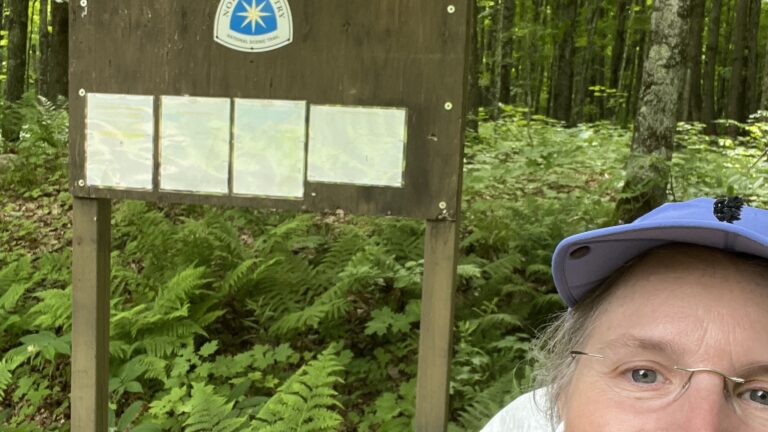
Here’s my latest update on solo backpacking the North Country Trail – Michigan Upper Peninsula: Knowing when to call it.
As an Amazon Associate, I earn from qualifying purchases.
Who is Betsy Leighton?
I’m a writer, blogger, and healer dedicated to helping individuals reconnect with their innate peace and wholeness by healing nervous system dysregulation. My personal experience with chronic illness called Mast Cell Activation Syndrome (MCAS) shapes my work, and my content offers tools to empower those with chronic illness to improve their well-being and take charge of their health.
I created the Sacred Self-Healing Method and am a trained and certified Safe and Sound Protocol provider, an author, blogger, and A Course in Miracles Teacher. I hold a Master of Divinity in Spiritual Counseling and am a trained spiritual mentor, with certificates in sound healing, aromatherapy, nutrition, and Sacred Deathcare. I offer a self-study certificate program in the Sacred Self-Healing Method, provide spiritual counseling and coaching, courses, and supported subscriptions for the Safe and Sound Protocol.
What is MCAS?
Mast Cell Activation Syndrome (MCAS) is a chronic condition that affects all organ systems. It can cause severe, disabling symptoms every day, including potentially fatal anaphylaxis.
The common triggers for MCAS are infections, toxic exposures including mold exposure and EMFs, trauma, concussions, and stress.
MCAS often occurs with other chronic conditions like Ehlers-Danlos Syndrome (EDS) and Postural Orthostatic Tachycardia Syndrome (POTS). Managing MCAS is challenging because many healthcare providers are unaware of it, and diagnostic tests can be unreliable. Treatments include antihistamines and mast cell stabilizers in the form of medications and supplements, along with avoiding triggers. Check out this post on managing MCAS.
Day 9 on the NCT MI-UP: – Knowing When to Call It
I spent the past three weeks at home cleaning and organizing my backpacking gear, planning my next solo sections, and managing my Lyme Disease. I took my mom kayaking for the first time this season, and we enjoyed a peaceful morning on Lake Virginia near Excelsior, MN.
As soon as I got a tick bite on the last section, I knew it had transmitted Lyme disease. I’ve had Lyme disease several times before, and I recognize the symptoms: persistent fatigue, arthritis in my knees, feet, and fingers, overwhelming anxiety and depression, sharp pain at the shoulder (the classic Lyme point), and burning sensations in my feet (a sign of Lyme neuropathy). All of these symptoms pointed clearly to Lyme. The cytology results from the tick I sent to TickCheck confirmed it carried Borrelia burgdorferi. After the bite, I took several days off from hiking due to severe fatigue. But with a combination of homeopathic remedies, herbal antimicrobials, binders, and rest, I regained my strength and felt fully back to myself by this week.
I had planned a two-day out-and-back hike between Superior Falls and the easternmost Powers Road Trailhead—on the far western edge of Michigan. The westernmost 30 miles of the NCT in the Upper Peninsula of MI are wooded for the first 11 miles, followed by a 19-mile roadwalk. I decided I am not doing the roadwalk; roadwalks are soul-sucking, and I’ve covered thousands of miles in training that more than make up for skipping any roadwalks I might encounter.
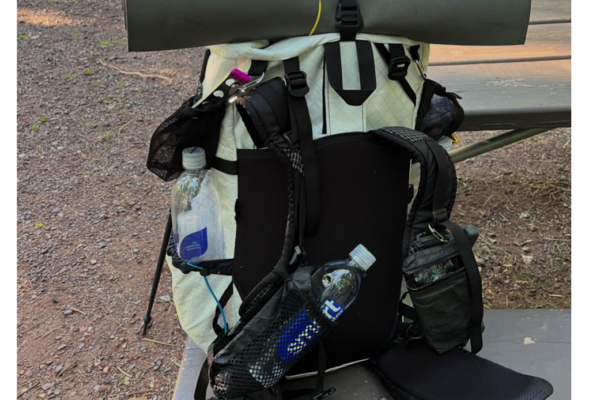
I planned to slack-pack this 11-mile stretch of wooded terrain (22 miles total, round trip) and camp in my car at the trailhead. Slack packing is a hiking method where backpackers lighten their load by leaving their heavy overnight gear (like a tent and sleep system) behind or having it transported by someone else. You hike with a lighter pack containing the ten essentials:
Navigation: map, GPS device/satellite communicator, battery pack]
- Headlamp
- Sun protection
- First aid
- Fire: matches, lighter, and stove
- Shelter: carried at all times (a lightweight emergency bivy)
- Extra food: beyond minimum expectations
- Extra water: beyond the minimum expectation, and a water filter
- Extra clothes: sufficient to survive an emergency overnight
I believed I could comfortably cover 10–12 miles per day on this section, by slack-packing and watching my fatigue level. I drove up to the trailhead yesterday and was relieved to see that there were very few mosquitoes. But as soon as I entered the woods, I was immediately swarmed by a dense cloud of biting insects. I quickly donned my full bug suit, which kept the bugs at bay.
After passing the lookout at Point Mountain, I reached the western Powers Road trailhead and stopped to rest and regroup. There, I found a deer tick attached to my stomach—removed with tweezers and saved for testing—and also picked off a half-dozen wood ticks. I was demoralized to have a new bite, plus felt more tired than usual, and was not quite myself. By the time I returned to my car, I had made the decision to call it and head home.
It’s exhilarating to continually push my body to its limits. Recently, I learned about a phenomenon called Anterior Mid-Cingulate Cortex (aMCC) growth. The aMCC is a region deep in the frontal lobes responsible for willpower, perseverance, and energy regulation. Neuroscientific research shows that this area undergoes neuroplasticity—growing in size and density—when you consistently engage in difficult tasks you don’t naturally want to do, like intense physical training or resisting temptation.
Crucially, once a challenge becomes easy and no longer causes discomfort, the aMCC stops growing from that experience — so it keeps me continually wanting to go longer distances. Since a larger aMCC is linked to greater resilience, sustained motivation, and even cognitive longevity, intentionally stepping outside your comfort zone is essential for strengthening this neural pathway.
This concept helped me understand how I’ve been able to steadily build stamina and endurance on the North Country Trail, and why I’ve felt driven to do it. I’ve literally been growing part of my brain through consistent challenge!
Despite that, it’s equally important to recognize when it’s time to stop. If I’m in danger, facing a storm, or feeling unwell, I know it’s time to call it. There’s no shame in stepping back, regrouping, and resting. This trip wasn’t going well—I wasn’t enjoying it, and the bugs were relentless. So, I did what was right: I called it and came home. I offered myself kindness and grace, recognized my limits, and chose to pull back instead of push past discomfort. There is a time to grow my aMCC, and there is an equally important time to know when to choose peace instead.
Tick-borne illness is now a common reality for backpackers across much of the U.S. Decades ago, when I first encountered it, I was terrified of reinfection, and my fear of wild spaces caused my world to shrink. I stayed safely at home, but missed out on what really fed my soul.
With nervous system healing, I overcame that fear, and I came to accept that mosquito and tick bites are inevitable. I’ve learned to manage the constant risk of reinfection. With tools to treat new infections and control symptoms, I’ve found a balance. When I weigh the physical, mental, and spiritual benefits of being in nature against the risks, the rewards far outweigh the dangers—so I choose to go forward solo backpacking the NCT with confidence. But I’ll be taking another extended break to heal before returning!
The bucket theory
The bucket theory simplifies understanding symptom reactions with MCAS. Imagine your body as an empty bucket you don’t want to overflow. Reactions to various stimuli fill the histamine bucket at different rates, forming the total histamine level (how full your bucket is). More histamine means more symptoms. By managing triggers, reducing exposures, and taking medications and supplements, you can control your bucket’s level.
Know your typical symptom progression
Understanding your symptom progression during a flare is key to developing your rescue plan. This post discusses how to recognize symptom progression so you can be prepared to address them.
Get my free ebook, symptom log, and meal plan!
Want a tool to easily track your symptoms?
Check out these circadian health tools!
I’m an affiliate with Bon Charge, a company that makes tools for circadian health, and you can receive 15% off your order with my coupon code BETSYL.
Bon Charge offers tools such as yellow– and red-tone blue-blocking glasses, red light therapy devices, PEMF mats, infrared saunas, and EMF-blocking products.
Sign up for the SSP!
I’ve found the Safe and Sound Protocol (SSP) to be the most helpful bottom-up healing strategy if your nervous system has been overloaded with toxic exposures, including mold or non-native EMFs, chronic infections, concussions, stress, or trauma. The SSP is a passive listening therapy that helps heal nervous system dysregulation. Many people with MCAS and other chronic conditions have nervous system dysregulation stemming from infections, toxic exposures, concussions, and trauma. The SSP is an easy-to-use app that lets you listen to specially filtered music for 30 minutes each day as part of a 5-hour cycle. Studies show the SSP has a profound effect on mental health and chronic conditions. Here’s a short podcast describing the Safe and Sound Protocol.
You can sign up for the SSP here!
Heal your mind!
While the SSP is a bottom-up, somatic therapy for healing the nervous system, the Sacred Self-Healing Method I offer is a top-down nervous system-healing modality that focuses on cognition, attention, perception, and emotion, using the mind’s higher functions. The SSP and the Sacred Self-Healing Method complement each other and together produce lasting results. Here’s a short podcast on my self-healing practice.
I provide one-on-one in-person and remote chronic illness and caregiver coaching, as well as Sacred Self-Healing Sessions based on the Sacred Self-Healing Method, a proven, novel co-creative healing modality detailed in my Books.
Order my books!
Here’s a short podcast highlighting my five books.
My latest book, Living In The Light: Healing with Forgiveness, Sound, and Light, is all about the tools that have been most helpful for me to heal: forgiveness, sound, through nervous system retraining using the Safe and Sound Protocol, and light, through entraining my circadian rhythm with the energy of the sun. Living In The Light is available here!
Rocks and Roots chronicles my solo backpacking journey on the Superior Hiking Trail and my efforts to overcome nervous system dysregulation, gut dysbiosis, and Mast Cell Activation Syndrome symptoms to complete the 328-mile hike successfully.
The Sacred Self-Healing Method ebook is available here and in most ebook retailers!
The Sacred Self-Healing Workbook is available for purchase here!
Betsy’s first book, Sacred Self-Healing: Finding Peace Through Forgiveness, is available here
Companion Recordings
The companion audio recordings of chants, guided meditations, and sound healing demonstrations that accompany the Sacred Self-Healing Method are available for free on my YouTube channel here
What do you think?
I’d love to have your reply below!
Disclaimer
The preceding material does not constitute medical advice. This information is for information purposes only and is not intended to be a substitute for professional medical advice, diagnosis, cure, or treatment.