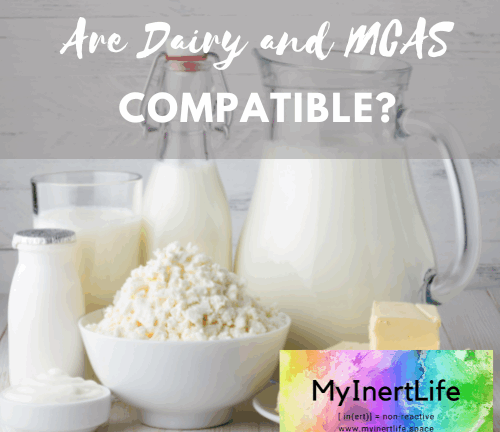
Are dairy and MCAS compatible? I often get questions about whether a particular food is okay for a lower histamine diet. Like, “Is dairy okay for Mast Cell Activation (MCAS)?”
The answer is, “It depends.”
We are each uniquely different, and when it comes to MCAS, each person will have their own unique triggering foods, sensitivities, and off-limits foods.
As an Amazon Associate, I earn from qualifying purchases.
Table of Contents
Who is Betsy Leighton?
I’m a writer, blogger, and healer dedicated to helping individuals reconnect with their innate peace and wholeness by healing nervous system dysregulation. My personal experience with chronic illness called Mast Cell Activation Syndrome (MCAS) shapes my work, and my content offers tools to empower those with chronic illness to improve their well-being and take charge of their health.
I created the Sacred Self-Healing Method and am a trained and certified Safe and Sound Protocol provider, an author, blogger, and A Course in Miracles Teacher. I hold a Master of Divinity in Spiritual Counseling and am a trained spiritual mentor, with certificates in sound healing, aromatherapy, nutrition, and Sacred Deathcare. I offer a self-study certificate program in the Sacred Self-Healing Method, provide spiritual counseling and coaching, courses, and supported subscriptions for the Safe and Sound Protocol.
What is MCAS?
Mast Cell Activation Syndrome (MCAS) is a chronic condition that affects all organ systems. It can cause severe, disabling symptoms every day, including potentially fatal anaphylaxis.
The common triggers for MCAS are infections, toxic exposures including mold exposure and EMFs, trauma, concussions, and stress.
MCAS often occurs with other chronic conditions like Ehlers-Danlos Syndrome (EDS) and Postural Orthostatic Tachycardia Syndrome (POTS). Managing MCAS is challenging because many healthcare providers are unaware of it, and diagnostic tests can be unreliable. Treatments include antihistamines and mast cell stabilizers in the form of medications and supplements, along with avoiding triggers. Check out this post on managing MCAS.
The truth about dairy and MCAS
Many dairy products are not considered safe on a lower histamine diet because they are cultured (like some kinds of butter, buttermilk, and sour cream), fermented (like yogurt and kefir), or aged (like many kinds of cheese, especially hard cheeses). Culturing, souring, fermenting, and aging all produce histamine in foods, making them histamine-rich.
So, generally, I avoid all milk products except mozzarella cheese and ricotta. Both mozzarella and ricotta are “fresh” cheeses that are not cultured, fermented, or aged.
The decision to include mozzarella and ricotta in my diet was not one I made lightly. After much trial and error, careful symptom logging, and research, I concluded that those two forms of dairy were relatively well tolerated. I have been completely dairy-free for years at a time, and I always found that gluten was a bigger trigger of inflammation for me. When I switched to a lower histamine, low-oxalate, sugar-free, low-carb, Keto diet, I was extremely limited in what I could eat. Because mozzarella and ricotta were considered less likely to trigger histamine intolerance, I gratefully added them back to my diet after some successful trials.
Still, I am careful with ricotta, and only use it the day I open the container. When the container is open for more than a day or two, I notice my symptoms start to progress. Mozzarella doesn’t seem to have quite as much potential to build histamine (at least in my experience), and I can tolerate eating it for several days after opening. And I can also tolerate individual serving-size mozzarella sticks.
What about inflammation vis-à-vis dairy and MCAS?
But beyond histamine, dairy products have also been implicated in promoting inflammation in the body. There are a few differing opinions on this topic.
Some people believe that the saturated fat in dairy products causes inflammation.
“… the main fat found in milk is saturated fat, and diets high in saturated fat can increase inflammation.” – Food Insight
While there is another camp that believes dairy doesn’t cause inflammation at all:
“According to new research, dairy foods and milk proteins do not cause inflammation, and in some cases, even combat inflammation.” – Very Well Health
Either way, the casein protein in cow’s milk dairy products is large relative to other proteins and can cause problems during digestion.
Dairy allergies
Some people have an outright allergy to milk as well.
“Milk allergy occurs when the body’s immune system reacts adversely to the proteins in milk and dairy products and activates an inflammatory response, which can range in severity from rashes to gastrointestinal issues to anaphylaxis.” – Food Insight
A1 vs. A2 milk
Understanding A1 and A2 Milk: A Piece of the Puzzle
Milk contains two primary proteins: casein (about 80%) and whey (about 20%). Casein primarily exists in two forms: A1 and A2.
The majority of cows naturally produce both A1 and A2 caseins in roughly equal amounts. However, some cows have been selectively bred (not genetically modified) to produce milk containing only A2 casein. Milk from goats and sheep is predominantly A2 casein.
The Casein Digestion Difference
One theory for why some people tolerate A2 milk better than A1 milk is that casein is digested differently. When the body breaks down the large A1 casein protein molecules, a small protein fragment can be released. This fragment is thought to cause dairy intolerance in some individuals and is often mistaken for lactose intolerance. In contrast, A2 milk does not release this same fragment, potentially eliminating the reaction.
— Source: The Celiac MD
My Personal Experience
I have found a limited tolerance for A2 yogurt, which I freeze in 4 oz. portions immediately after purchasing it from my supplier. I consume it no more than once a week, as I do notice increased inflammation (such as sore joints) afterward. Nonetheless, it offers a welcome variety of dietary options. If my body’s inflammation “bucket” (my bucket) is not very full, I occasionally risk having a small amount of A2 frozen yogurt.
Having a limited diet is hard!
I have tried dozens of variations on a low-inflammatory diet, and if you are in this camp, I feel for you! It is not easy! Part of it is emotional because eating is a human activity that we do communally to bond. It’s hard to always be eating something different from your family and friends! Part of the issue is logistical. You have to meal plan, make meals ahead, freeze them, and (if you have histamine intolerance) also worry about how you prepare the food and freeze it right away after it’s cooked. Part of the difficulty is also financial. It can cost a lot more to purchase organic, whole foods, A2 milk, and specialized versions of foods that contain less histamine.
The bucket theory
The bucket theory simplifies understanding symptom reactions with MCAS. Imagine your body as an empty bucket you don’t want to overflow. Reactions to various stimuli fill the histamine bucket at different rates, forming the total histamine level (how full your bucket is). More histamine means more symptoms. By managing triggers, reducing exposures, and taking medications and supplements, you can control your bucket’s level.
Know your typical symptom progression
Understanding your symptom progression during a flare is key to developing your rescue plan. This post discusses how to recognize symptom progression so you can be prepared to address them.
Get my free ebook, symptom log, and meal plan!
Want a tool to easily track your symptoms?
Check out these circadian health tools!
I’m an affiliate with Bon Charge, a company that makes tools for circadian health, and you can receive 15% off your order with my coupon code BETSYL.
Bon Charge offers tools such as yellow– and red-tone blue-blocking glasses, red light therapy devices, PEMF mats, infrared saunas, and EMF-blocking products.
Sign up for the SSP!
I’ve found the Safe and Sound Protocol (SSP) to be the most helpful bottom-up healing strategy if your nervous system has been overloaded with toxic exposures, including mold or non-native EMFs, chronic infections, concussions, stress, or trauma. The SSP is a passive listening therapy that helps heal nervous system dysregulation. Many people with MCAS and other chronic conditions have nervous system dysregulation stemming from infections, toxic exposures, concussions, and trauma. The SSP is an easy-to-use app that lets you listen to specially filtered music for 30 minutes each day as part of a 5-hour cycle. Studies show the SSP has a profound effect on mental health and chronic conditions. Here’s a short podcast describing the Safe and Sound Protocol.
You can sign up for the SSP here!
Heal your mind!
While the SSP is a bottom-up, somatic therapy for healing the nervous system, the Sacred Self-Healing Method I offer is a top-down nervous system-healing modality that focuses on cognition, attention, perception, and emotion, using the mind’s higher functions. The SSP and the Sacred Self-Healing Method complement each other and together produce lasting results. Here’s a short podcast on my self-healing practice.
I provide one-on-one in-person and remote chronic illness and caregiver coaching, as well as Sacred Self-Healing Sessions based on the Sacred Self-Healing Method, a proven, novel co-creative healing modality detailed in my Books.
Order my books!
Here’s a short podcast highlighting my five books.
My latest book, Living In The Light: Healing with Forgiveness, Sound, and Light, is all about the tools that have been most helpful for me to heal: forgiveness, sound, through nervous system retraining using the Safe and Sound Protocol, and light, through entraining my circadian rhythm with the energy of the sun. Living In The Light is available here!
Rocks and Roots chronicles my solo backpacking journey on the Superior Hiking Trail and my efforts to overcome nervous system dysregulation, gut dysbiosis, and Mast Cell Activation Syndrome symptoms to complete the 328-mile hike successfully.
The Sacred Self-Healing Method ebook is available here and in most ebook retailers!
The Sacred Self-Healing Workbook is available for purchase here!
Betsy’s first book, Sacred Self-Healing: Finding Peace Through Forgiveness, is available here
Companion Recordings
The companion audio recordings of chants, guided meditations, and sound healing demonstrations that accompany the Sacred Self-Healing Method are available for free on my YouTube channel here
What do you think?
I’d love to have your reply below!
Disclaimer
The preceding material does not constitute medical advice. This information is for information purposes only and is not intended to be a substitute for professional medical advice, diagnosis, cure, or treatment.