
This post covers how to manage stress with a chronic illness.
As an Amazon Associate, I earn from qualifying purchases.
Who is Betsy Leighton?
I’m a writer, blogger, and healer dedicated to helping individuals reconnect with their innate peace and wholeness by healing nervous system dysregulation. My personal experience with chronic illness called Mast Cell Activation Syndrome (MCAS) shapes my work, and my content offers tools to empower those with chronic illness to improve their well-being and take charge of their health.
I created the Sacred Self-Healing Method and am a trained and certified Safe and Sound Protocol provider, an author, blogger, and A Course in Miracles Teacher. I hold a Master of Divinity in Spiritual Counseling and am a trained spiritual mentor, with certificates in sound healing, aromatherapy, nutrition, and Sacred Deathcare. I offer a self-study certificate program in the Sacred Self-Healing Method, provide spiritual counseling and coaching, courses, and supported subscriptions for the Safe and Sound Protocol.
What is MCAS?
Mast Cell Activation Syndrome (MCAS) is a chronic condition that affects all organ systems. It can cause severe, disabling symptoms every day, including potentially fatal anaphylaxis. MCAS often occurs with other chronic conditions like Ehlers-Danlos Syndrome (EDS) and Postural Orthostatic Tachycardia Syndrome (POTS). Managing MCAS is challenging because many healthcare providers are unaware of it, and diagnostic tests can be unreliable. Treatments include antihistamines and mast cell stabilizers, as well as avoiding triggers. Check out this post on managing MCAS.
Stress
Stress is implicated in many physical and mental conditions that affect your health, weaken your immune system, and cause inflammation. To function at your best, you need to pay attention to your energetic hygiene, set effective boundaries, attend to your self-care and communication, and manage your stress effectively.
Why stress doesn’t help chronic illness
Stress significantly worsens chronic illness by triggering physiological responses that hinder the body’s ability to heal and regulate itself. When stressed, the body releases hormones such as cortisol and adrenaline, triggering a fight-or-flight response that leads to increased inflammation, elevated heart rate, and suppressed immune function. This constant state of alert places additional strain on already compromised systems, exacerbating symptoms like pain, fatigue, and flare-ups. Furthermore, chronic stress makes managing daily symptoms harder. It can negatively impact mental health, creating a vicious cycle where worry about the illness intensifies symptoms, which in turn causes more stress, ultimately diminishing quality of life.
Manage stress with a chronic illness
The following ideas help keep your stress at manageable levels by controlling what you can in your life. You will still encounter stressful events and situations, but having a stress “bucket” that is not already full to overflowing when they happen allows you to meet them from a place of greater balance, maintain your equilibrium, and stay resilient.
- For most people, getting good sleep means about seven hours per night. Your particular physiology may require more or less, but if you are waking up on your own in the morning without an alarm clock, you are probably getting enough sleep.
- Spend time in nature. Being outside lowers cortisol levels, and you will benefit from sunlight by producing Vitamin D. There are beneficial chemical compounds available to us at any time in the soil (gardening) and near trees (forest bathing), and fresh air has enormous benefits for immune health. Take a walk outside each day, open windows when the weather permits, and plan activities around appreciating nature.
- Practice self-care that works with your chronic illness.
- Practice forgiveness. There are infinite benefits to letting go of what is bothering you, not sweating the small stuff, and practicing forgiveness as taught in A Course in Miracles.
- Pay attention to the energy around you. Are you surrounding yourself with people who support you and build you up, or those who feed your negative patterns? Are you frequently annoyed or made uncomfortable by your living situation, work environment, or the vibe around you? You can make conscious choices not to spend time and energy on people or in places that are detrimental to your well-being.
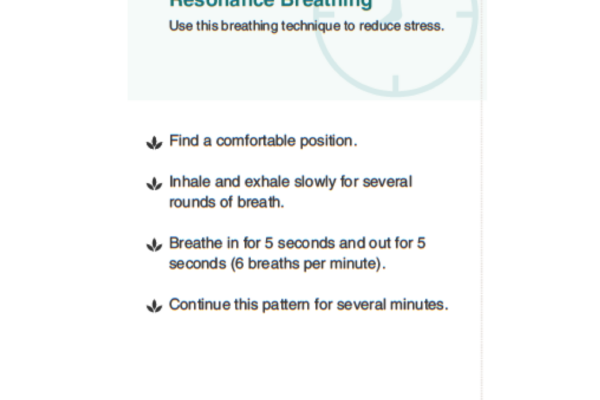
- Practice belly breathing. Getting adequate oxygen prompts a state of parasympathetic rest and reset.
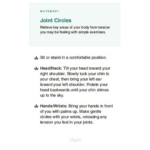
- Practice gentle movement. Gentle movement is excellent for preparing for meditation, for starting your day, or at transitions to ease your body and mind into the next activity.
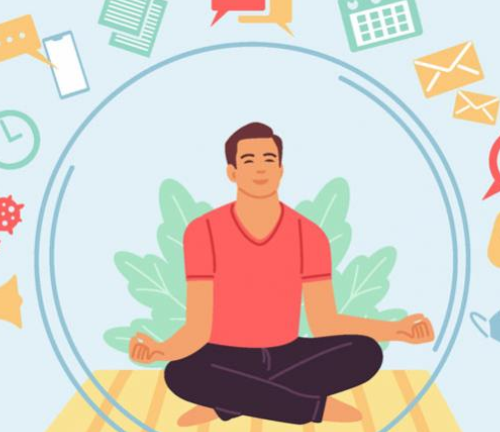
- Organize your life mindfully. Clutter in your surroundings contributes to feeling stressed. Are you attempting to do too much in a day? Are you constantly multitasking? Mindfulness begins with the breath and extends to all aspects of your life. Plan your day based on what is sustainable given your time and energy. Create a pleasant home and work environment by decluttering. Try to focus on one task at a time. Spend time being aware of your thoughts in meditation. Take a few mindful breaths each hour to re-ground yourself in the present moment.
- Detox from technology. Your phone and electronic devices tether you to receiving a constant stream of information, which can lead to information overload. Electronic devices also emit non-native electromagnetic frequencies (EMFs), which can be harmful to your health. Consider taking a planned break from technology every day. Please turn your phone off or set it to silent while you eat. Please put it on airplane mode while you sleep. And try spending at least one day each month completely tech-free.
- Control where you get your information. Mainstream news media are unnecessarily focused on negative stories that sell ads. Don’t watch the evening news, and be mindful of where you get your information. Many positive news outlets have arisen lately that focus on the good in the world.
The bucket theory
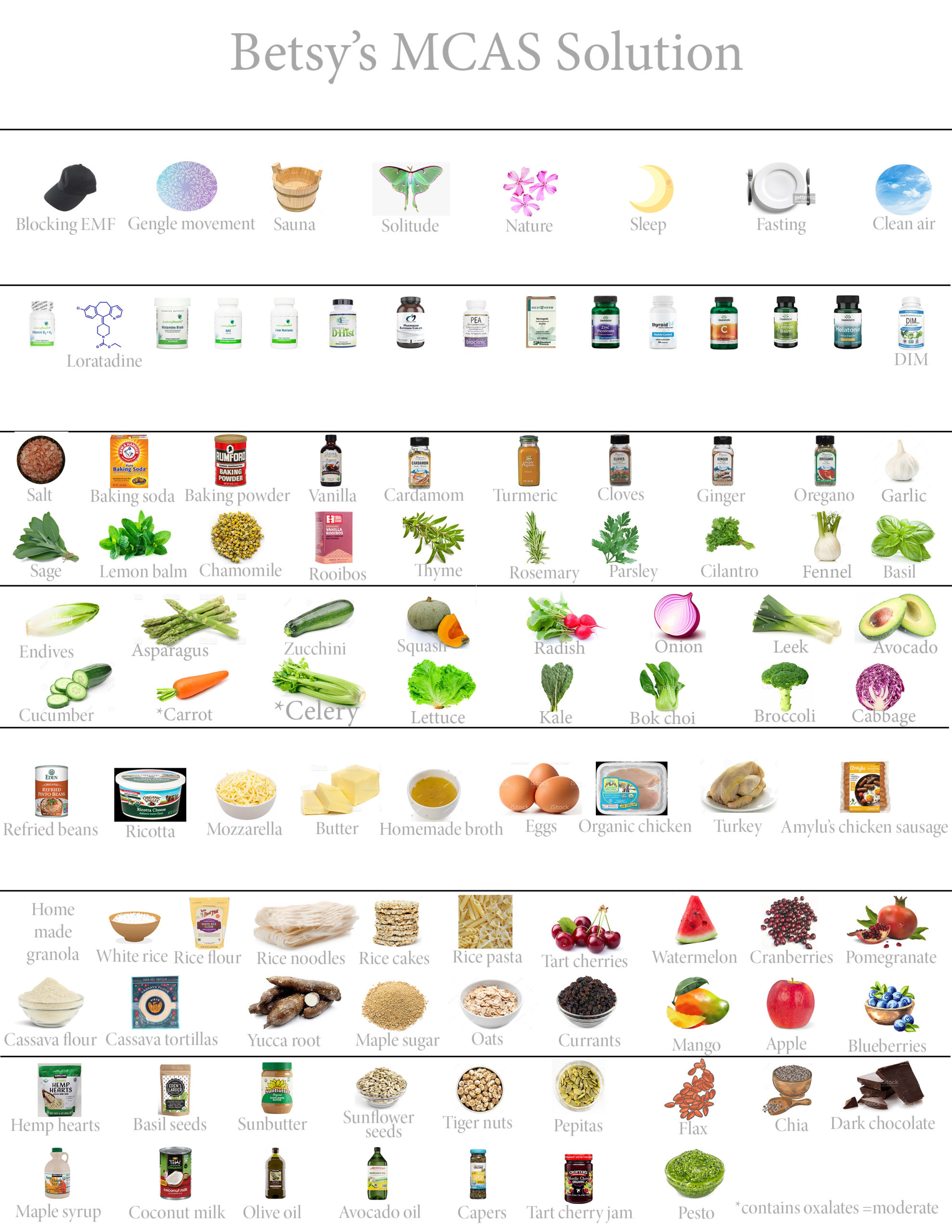
The bucket theory simplifies understanding symptom reactions with MCAS. Imagine your body as an empty bucket you don’t want to overflow. Reactions to various stimuli fill the histamine bucket at different rates, forming the total histamine level (how full your bucket is). More histamine means more symptoms. By managing triggers, reducing exposures, and taking medications and supplements, you can control your bucket’s level.
Know your typical symptom progression
Understanding your symptom progression during a flare is key to developing your rescue plan. This post discusses how to recognize symptom progression so you can be prepared to address them.
Get my free ebook, symptom log, and meal plan!
Want a tool to easily track your symptoms?
Check out these circadian health tools!
I’m an affiliate with Bon Charge, a company that makes tools for circadian health, and you can receive 15% off your order with my coupon code BETSYL.
Bon Charge offers tools such as yellow– and red-tone blue-blocking glasses, red light therapy devices, PEMF mats, infrared saunas, and EMF-blocking products.
Sign up for the SSP!
I’ve found the Safe and Sound Protocol (SSP) to be the most helpful bottom-up healing strategy if your nervous system has been overloaded with toxic exposures, including mold or non-native EMFs, chronic infections, concussions, stress, or trauma. The SSP is a passive listening therapy based on Polyvagal Theory that helps heal nervous system dysregulation. Many people with MCAS and other chronic conditions have nervous system dysregulation stemming from infections, toxic exposures, concussions, and trauma. The SSP is an easy-to-use app that lets you listen to specially filtered music for 30 minutes each day as part of a 5-hour cycle. Studies show the SSP has a profound effect on mental health and chronic conditions. Here’s a short podcast describing the Safe and Sound Protocol.
You can sign up for the SSP here!
Heal your mind!
While the SSP is a bottom-up, somatic therapy for healing the nervous system, the Sacred Self-Healing Method I offer is a top-down nervous system-healing modality that focuses on cognition, attention, perception, and emotion, using the mind’s higher functions. The SSP and the Sacred Self-Healing Method complement each other and together produce lasting results. Here’s a short podcast on my self-healing practice.
I provide one-on-one in-person and remote chronic illness and caregiver coaching, as well as Sacred Self-Healing Sessions based on the Sacred Self-Healing Method, a proven, novel co-creative healing modality detailed in my Books.
Order my books!
Here’s a short podcast highlighting my five books.
My latest book, Living In The Light: Healing with Forgiveness, Sound, and Light, is all about the tools that have been most helpful for me to heal: forgiveness, sound, through nervous system retraining using the Safe and Sound Protocol, and light, through entraining my circadian rhythm with the energy of the sun. Living In The Light is available here!
Rocks and Roots chronicles my solo backpacking journey on the Superior Hiking Trail and my efforts to overcome nervous system dysregulation, gut dysbiosis, and Mast Cell Activation Syndrome symptoms to complete the 328-mile hike successfully.
The Sacred Self-Healing Method ebook is available here and in most ebook retailers!
The Sacred Self-Healing Workbook is available for purchase here!
Betsy’s first book, Sacred Self-Healing: Finding Peace Through Forgiveness, is available here
Companion Recordings
The companion audio recordings of chants, guided meditations, and sound healing demonstrations that accompany the Sacred Self-Healing Method are available for free on my YouTube channel here
What do you think?
I’d love to have your reply below!
Disclaimer
The preceding material does not constitute medical advice. This information is for information purposes only and is not intended to be a substitute for professional medical advice, diagnosis, cure, or treatment.