
Here’s part six of my journey solo backpacking the North Country Trail in Upper Michigan.
As an Amazon Associate, I earn from qualifying purchases.
Who is Betsy Leighton?
I’m a writer, blogger, and healer dedicated to helping individuals reconnect with their innate peace and wholeness by healing nervous system dysregulation. My personal experience with chronic illness called Mast Cell Activation Syndrome (MCAS) shapes my work, and my content offers tools to empower those with chronic illness to improve their well-being and take charge of their health.
I created the Sacred Self-Healing Method and am a trained and certified Safe and Sound Protocol provider, an author, blogger, and A Course in Miracles Teacher. I hold a Master of Divinity in Spiritual Counseling and am a trained spiritual mentor, with certificates in sound healing, aromatherapy, nutrition, and Sacred Deathcare. I offer a self-study certificate program in the Sacred Self-Healing Method, provide spiritual counseling and coaching, courses, and supported subscriptions for the Safe and Sound Protocol.
What is MCAS?
Mast Cell Activation Syndrome (MCAS) is a chronic condition that affects all organ systems. It can cause severe, disabling symptoms every day, including potentially fatal anaphylaxis.
The common triggers for MCAS are infections, toxic exposures including mold exposure and EMFs, trauma, concussions, and stress.
MCAS often occurs with other chronic conditions like Ehlers-Danlos Syndrome (EDS) and Postural Orthostatic Tachycardia Syndrome (POTS). Managing MCAS is challenging because many healthcare providers are unaware of it, and diagnostic tests can be unreliable. Treatments include antihistamines and mast cell stabilizers in the form of medications and supplements, along with avoiding triggers. Check out this post on managing MCAS.
Why solo backpacking?
In 2024, I solo backpacked most of the Superior Hiking Trail and wrote a book about the experience. I have a chronic illness called Mast Cell Activation Syndrome (MCAS), which causes symptoms of severe inflammation, pain, and allergic-type reactions. I’ve managed my condition with dietary changes, antihistamines, and mast cell stabilizers. In solo backpacking, I’ve found a hobby that keeps me fit, challenges me, and actually helps me manage my symptoms. Over the past two years, I’ve gradually increased my exercise tolerance, starting from not being able to exercise at all. In June of 2024, I began solo backpacking the Superior Hiking Trail, and at that time, I could only walk one mile. As my stamina and strength grew, I increased my pack weight and mileage until I reached my furtherst daily distance of up to 38 miles.
I’ve done a lot of work to heal MCAS by treating infections and toxic mold exposure, improving my gut health, and retraining my nervous system. Along with those things, I found being in nature in sync with my circadian rhythm to be a huge piece of my healing path.
In 2025, I solo backpacked across northern Wisconsin in four sections on the NCT with the help of some trail angels who shuttled me from one trailhead to another. If you’re interested in reading about my past sections of the NCT, check out my blog: https://betsyleighton.com/solo-backpacking/
In 2026, I’m aiming to solo backpack the 550-mile section of the NCT in the Upper Peninsula of Michigan.
Why the North Country Trail?
The North Country Trail spans 4800 miles from North Dakota to Vermont, and traverses my home state of Minnesota. I was attracted to exploring the Superior Hiking Trail, which is a segment of the NCT in Minnesota, first because it holds fond memories from my childhood. But once I finished the SHT, I was hooked on solo backpacking and wanted to continue to explore the North Country Trail, where it picks up after the SHT at the Western border of Wisconsin. From there, I’ve set my sights on completing the entire NCT over the next few years, and I hope to solo backpack at least 500 miles per season.
Gear
My backpack weight is usually about 20 pounds on a typical 3-day solo backpacking trip. My base weight is a little under 13 pounds–which includes my shelter (tent), sleep system (quilt, sleeping pad, inflatable pillow, etc.), and basic safety gear for first aid and gear repair. Food and water are the heaviest items in my pack, and they add another 7-10 pounds to my pack. You should really only carry 15% of your body weight on your back, so that limits what I can carry. I’ve tried a lot of different gear setups, and have found that with my petite 5’2″ frame and weight, it works best for me to use ultralight backpacking gear. You can check out my gear list here.
Sewing
With MCAS, I react to many fabrics, scents, foods, and textures. I’ve sewn a lot of my own backpacking clothing because it allows me to use the fabrics I tolerate and create fits that suit my style and comfort. You can check out my sewing projects here.
Tolerating exercise
This post covers the unique challenges to exercising when you have a chronic illness and offers tips and tricks I’ve found to make it work when you have physical limitations.
Part six solo backpacking the NCT MI-UP
Day 19: Solo Backpacking the NCT MI-UP – M123/Bissel Creek to Blind Biscuit Creek – Daily mileage: 24.64, Running Total: 876.54
Sunday, I left home at 5 AM and drove to the Rivermouth Campground outside Tahquamenon State Park. I spoke with the ranger, left a food bag at the office, and will pick it up on Wednesday as I pass through the park. The river area at the campground was peaceful, and I had three bars of cell service when I stood near the water, so I called David. I slept well and woke at 4:30 AM Monday, then headed out at 5 AM to drive to the Two Hearted River Campground, where my shuttle would pick me up.
At the Mouth of the Two Hearted, I had about an hour to prepare for my ride—making tea, reading a bit of my book, and organizing before Scott, the trail angel, and his wife arrived to drive me to the Michigan 123/Bissell Creek trailhead. The drive took about an hour and 45 minutes, with the first hour on rugged dirt roads near the river’s mouth—difficult even for an all-wheel-drive vehicle.
It was hard to find a ride for this section. Eventually, I found a shuttle charging $450. Fortunately, a fellow solo backpacker in upper Michigan, named Susan, shared the contact information for Scott—a trusted ride provider and trail angel. Having a personal connection with someone who’s giving me a ride makes a big difference compared to an anonymous shuttle driver, and I enjoyed meeting Scott and his wife.
After the trail angels dropped me off, I stepped into the “green tunnel.” In backpacking, a “green tunnel” refers to a trail completely enclosed by a dense, leafy forest canopy overhead and thick vegetation on the sides.
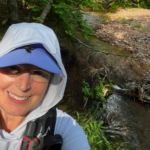
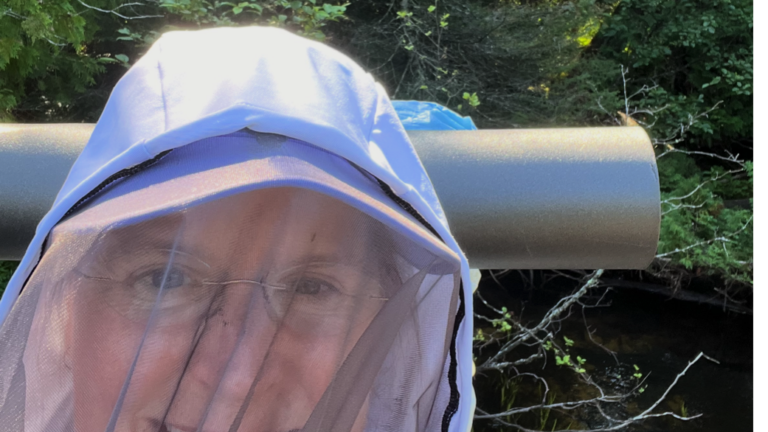
The first four miles were dense forest with swarms of biting mosquitoes. I tested out my new graphene sun hoodie, which features mittens and a net head shield. Up to this point, I thought it was the best bug deterrent I’ve used so far, though I had to confront the reality: when surrounded by thousands of biting insects, I was still being bitten as if I wasn’t wearing it at all. So I ended up wearing my Fab Shell Ultra layers—jacket, pants, and mittens—which only made me hotter.
My plan is to cover 103 miles between M-123/Bissell Creek and the mouth of the Two Hearted River, where I left off on my last section over five days, aiming for about 20 miles per day. My next two nights will be spent wild camping in Hiawatha State Forest. On Wednesday, I have a reservation at Rivermouth Campground, where I will pick up my food bag. Thursday, I’ll camp near Tahquamenon Falls. And on Friday, I’ll complete a 22-mile push back to my car before heading home.
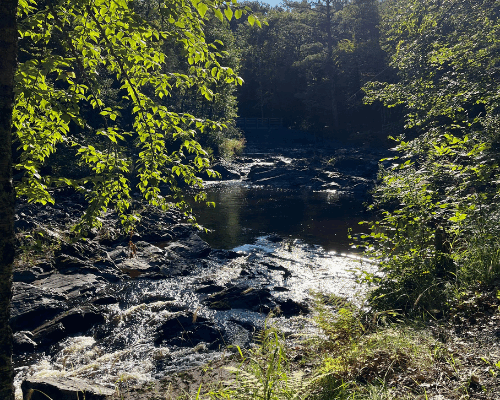
After four miles, the trail became rocky, requiring me to shorten my stride to navigate safely. I stopped at a bridge over a river crossing—briefly bug-free and refreshing—and ate lunch, made electrolyte mix, and re-braided my hair.
By the 10-mile mark, I was hot, sweaty, and overwhelmed by relentless mosquitoes. I stopped at the nearest flat spot and pitched my tent. I removed my bugproof clothing, elevated my feet, and rested for about 40 minutes. With cell service, I checked in with my family. I ate a snack, mixed more electrolytes, and packed up to continue.
I had hoped to cover 24 miles that day, but the pace was slow due to the combination of 86°F heat, humidity, and biting insects. Mercifully, the terrain was relatively flat and well-maintained. There were a few fallen trees to navigate, but the breeze through the trees provided a welcome relief and lifted my mood.
Yet, I realized I wasn’t enjoying myself. I dislike slogging through endless green tunnels with no vistas, no lakes in sight, and relentless mosquitoes. I’m here because I love being unplugged and immersed in nature. I love the challenge of pushing beyond my comfort zone. But on this stretch, I had to revisit what truly motivates me because my mood was dour. The heat, humidity, and bugs were relentless. I was stuck in a green tunnel with no views, and I wouldn’t see Lake Superior for another 100.
Unfortunately, I also ran low on water. I’d gone 22 miles by 5 PM and stopped at a flat, well-drained spot surrounded by trees. As I settled into my tent, I checked my water supply and realized I had only half a liter left. I was desperately thirsty. Because of the heat, I had already consumed 2-liters mixed with electrolytes, and I’d missed several opportunities to filter water due to the mosquito infestation. On one occasion, when I stopped on a bridge over a flowing creek, there was no access to the water. At other supposed sources, the creek was dry. So I lay in my tent for half an hour, resting and gathering strength to keep going as the light remained.
I resumed hiking, but the next two water sources were also dry, and I grew a little anxious. Luckily, the trail led me to one of the most beautiful blueberry patches I’ve ever seen—lush, dense with heavy bushes, each cluster bursting with ripe, enormous berries. I removed my head net and picked as many berries as I could in ten minutes, stuffing them into my mouth. They were exactly what I needed: energy, hydration, and fuel to keep going through the bugs.
Finally, after four more miles, I reached a flowing stream. I filled my 2-liter water bladder and began filtering water as I walked, searching for a suitable spot to camp. After another mile, my water was filtered, so I pitched my tent and prepared for bed. I didn’t take many photos today because I was so busy swatting mosquitoes.
Day 20: Solo Backpacking the NCT MI-UP – Blind Biscuit Creek to mile 482 – Daily mileage: 18.26, Running Total: 894.8
I camped overnight at Blind Biscuit Creek, having filtered as much water as possible. I set up camp and slept fitfully, disturbed by hearing animals creeping around my tent several times.
I woke at 5 AM and was on the trail by 6, after breakfast, mixing electrolytes and brushing my teeth. The first four miles followed Biscuit Creek before joining an ORV road through a recently logged area. Blueberries thrive in acidic soils that have been burned or logged—conditions with open sky and full sun exposure. I passed through a massive blueberry patch, which became my morning snack. They were incredibly delicious and truly hit the spot.
As soon as the sun rose high, the heat returned. I wore my black Fab Shell Ultra suit to deter bugs, which is breathable but still absorbs solar heat and becomes quite warm. Despite my best efforts to shield my ankles and hands, I’ve been bitten all over. Everywhere I go, a swarm of mosquitoes surrounds me, relentless and voracious.
The only respite from the bugs is to pitch my tent and hide inside. At 10 a.m., I pitched my tent in a shady spot, checked my map to confirm my location, rested, and had a snack. I had covered about 6.5 miles and was nearing the Dick Road trailhead. My next water source was at Soldier Lake National Park Campground, another 6.5 miles away. Optimistically, I had considered aiming for around 25 miles today, to reach the Namaka Overlook Pond shelter. But the heat and bugs were slowing me down. I can’t wait to emerge from this stretch and see Lake Superior again, because that’s what truly feeds my body, soul, and spirit.
After another 6.5 miles, I reached Soldier Lake Campground, a national park site in the Hiawatha National Forest. There was a potable water spigot, and I immediately drank half a liter and filled all my water bottles. I disposed of my trash in a nearby bin, then set up my tent and rested. My bug pants had a large tear, so I sewed it up promptly.
After that, I resumed hiking. Unfortunately, my right knee has started bothering me—this is a new pain, likely due to sulfur cycle dysfunction, which I’ve experienced frequently on trail hikes when consuming high-sulfur foods. Most trail foods are high in sulfur. At home, I limit such foods and use Epsom salt baths to manage the issue. Out here, I’m limited to homeopathic remedies and addressing my mast cell activation symptoms, because I can’t take NSAIDs.
At mile 482, I set up camp and called it a day after hiking 18.5 miles. I’d hoped to go further than 20, but the intense heat earlier in the day and persistent knee pain forced me to stop early. This means the section will likely take longer than I originally planned.
Right after setting up camp, it began to rain lightly—perfect timing. Rain was forecasted overnight, with only a 45% chance, so we’ll see what the night holds.
Day 21: Solo Backpacking the NCT MI-UP – Mile 482 to River Mouth Campground – Daily Mileage: 23.17, Running Total: 917.97
My neuropathy had been bothering me overnight, but with an extra dose of my MCAS remedies, I managed to fall asleep and slept fairly well. It had only rained lightly the prior evening, so I zipped open my tent flap to improve airflow. By morning, there was only a slight amount of condensation inside. I packed up and started hiking at 6:30 AM. The temperature was 60°F and overcast, and thankfully, I began the day with dry shoes.
Today I finally found my rhythm. On Monday, I’d been anxious about finding water, especially toward the end. Tuesday had been brutally hot and buggy, and my right knee began to ache in the second half of the day. But today, as I stepped onto the trail, I was pain-free. It was cool, the bugs were absent, and there was just a hint of dampness on the trail—not enough to soak through my shoes.
I’d covered 22 miles on Monday and 18 yesterday. Today, I have 22 miles to reach Rivermouth Campground, where I’ve reserved a site and stored a food bag at the park office. Thursday and Friday, I’ll hike roughly 22 miles each.
This morning, I passed through recently logged areas with deeply rutted, muddy tire tracks cutting through what had once been a forest. The land hadn’t yet recovered—only ferns grew, instead of the usual mix of blueberries, saplings, and native plants.
I began my day with gratitude: for a strong, capable body, for my family’s support, for lightweight, easy-to-carry gear, clean air and water, and food I can tolerate. I thought about how much harder it must have been for my dad when he went on wilderness trips as a young man, especially when he and his brother canoed to Hudson Bay. Back then, gear was made of cotton and wool. Everything was heavy, easily got wet, and took forever to dry. I have so much to be grateful for in the advances in outdoor technology.
Though I’ve seen no other backpackers on the NCT MI-UP, I’ve occasionally spotted hiking boot prints heading west, ahead of me. Whenever I face a difficult trail section, I think of Tara Atkinson and remember that she’s already been through here. That knowledge inspires me to keep pushing past challenges, knowing someone has already walked this path.
Wildlife-wise, I spotted a pair of majestic sandhill cranes calling to each other as they landed on a pond.
At 9:20 AM, I left the river behind and entered the green tunnel. I’d covered one-third of my projected daily distance, and the bugs were now active. I switched to full bug protection. The heat was rising steadily, so I knew I’d need to rest in my tent around the 10-mile mark.
My hikes on Monday and Wednesday featured frequent puncheons and trail improvements. Puncheon bridges are low, simple wooden footbridges or boardwalks used on hiking trails to span wet areas, bogs, mud, or small streams. It typically sits only a few inches to a couple of feet above the ground, protecting fragile wetland soils and keeping hikers’ feet dry.
My new female solo backpacking friend on the NCT, Susan, mentioned that this section is well-organized and maintained. That has proven correct. Blown-down trees have been cleared, and the path is smooth and open. You can tell when a trail chapter has strong resources, time, and committed volunteers: the trail is visibly cared for. In the Shore-to-Shore section of the NCT in upper Michigan, every small stream or dip has a footbridge or puncheon. These require significant investment—money, effort, materials—and reflect the dedication of those who maintain them. I’m deeply grateful for that effort.
The first 10 miles today were effortless—overcast skies, cooler temps, and minimal bugs. I covered them quickly. At 10:00 AM, I stopped at the trailside shelter, set up my tent, ate a snack, and regrouped. Then I resumed the trail, hoping soon to see Lake Superior again.
A few miles later, I exited the green tunnel and walked along the shoreline of Lake Superior, alternating between following the water’s edge and looping back up to the highway for river and creek crossings. Then it plunged back into the green tunnel for 4 miles on deeply eroded, muddy trails. That stretch was in terrible condition—ORVs had completely damaged the area. When I finally passed the entrance gate, I saw a sign stating the zone was closed to ORVs, yet the evidence showed that they’d all gone around the barricade to use the trail anyway.
After that, I pitched my tent again in a dry spot and rested for the final roadwalk to Rivermouth Campground. The last 4 miles on the road were the worst I’ve ever endured. The surface was being chewed up by a massive machine that emits burned tire fumes, asphalt smoke, and deafening noise. I have a new appreciation for the road workers who face the sun, speeding trucks, roaring machinery, and exhaust fumes all day. Immediately after the construction zone ended, I arrived at the campground—yay!
After picking up my food bag, I rushed to the bathhouse and took a shower, even without a towel or comb. It felt incredible to wash off four days of camping sweat. I washed my clothes, put them back on, and walked to the river’s edge to air-dry them. I ate dinner and reorganized my pack.
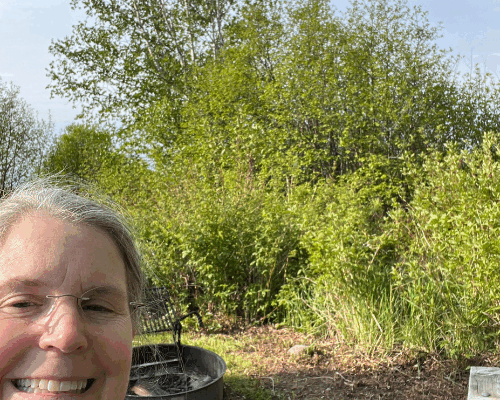
Finally, I set up camp at my rustic site and rested peacefully, lulled by the gentle breeze from the river, views of the quiet beauty of the water, and the sound of children playing in the campground.
Day 22: Solo Backpacking the NCT MI-UP – River Mouth Campground to Wilderness Loop Trail – Daily mileage: 22, Running Total: 939.97
Thursday began with a gorgeous morning—clear skies and warm, inviting weather, though it seemed likely that the heat would return later in the day. Last night, while charging my power bank, I realized I’d brought the wrong power block to use at the campground outlet. I now have just one bar of charge left in my power bank, and my phone is at about 70%. With careful planning, I should be able to navigate the next two full days without issue. I called David, and it was wonderful to hear his voice.
After breakfast and packing up, I hiked out of the campground, crossed the bridge over the Tahquamenon River, and resumed my journey. Being on wooded trails feels significantly better on my body than road walking—more natural, more grounded, and less taxing.
I’ve reserved a site at the Lower Falls, 14 miles from here, but it’s not ideal. It was the only campsite available between here and my car, 40 miles away. I’d prefer to divide the journey into more manageable 20-mile days rather than facing a long final stretch on Friday. So I’ll probably stop at the Lower Falls to regroup, then hike as far as I can today to make tomorrow’s hike more reasonable.
This morning, I noticed that my trail running shoes are in serious trouble after this section. I’ve loved my Ultra Superior 4, they’re lightweight, minimal, and allow me to feel the earth beneath my feet. I’ve acquired six barely-used pairs from Poshmark and eBay, and it’s been a joy to find so many in good condition. But the last two sections have completely worn out my shoes. Now I’m down to four pairs, and they’re wearing down quickly. I appreciate them not just for their lightness, but for the way they encourage my muscles to do the work of supporting my feet, rather than the other way around.
From about 7 miles onward, the hike became increasingly difficult due to rising temperatures and relentless bug activity. By 2 PM, I was severely overheated and mentally drained. I stopped to pitch my tent and was demoralized to realize I still had two miles to go to reach the Lower Falls campground. I’d thought I was nearly there.
I’ve been conserving my phone battery—avoiding navigation use and turning it off when not essential—so I hadn’t been tracking my progress closely. After resting for about 40 minutes, I gave myself grace for the heat and the difficulty, and consciously reframed the experience to focus on enjoying the journey rather than just completing it as fast as possible.
I hiked an additional two miles to reach the Lower Falls campground, where I filled my water bottles and used the restroom. Then I saw a sign with silverware on it—indicating a restaurant—and followed it to a café. I’m so sick of my trail food, so it was a treat to order a salad with chicken and a scoop of chocolate ice cream. It was delicious and decadent, and it gave me the energy to keep going.
There’s a 4-mile river trail between the Lower and Upper Falls. The sign at the outset warned it was extremely difficult—muddy, treacherous footing, and full of poison ivy. It was reportedly only for advanced hikers. Yet, I saw dozens of people coming off the trail who looked relatively dry and unharmed, including an intergenerational Korean family with grandparents and a group of four British women. One of them commented, ‘Your net trousers are brilliant!’
I tried hard not to touch the poison ivy, but it was everywhere. The trail lived up to its reputation—overused, eroded, and in poor condition. Many bridges and puncheons were rotting or falling apart. The 4-mile stretch was grueling, and by the time I finished, I wasn’t in the mood to return up to the Upper Falls to look around. So I simply continued on, following the blue blazes back onto the North Country Trail.
After that, I hiked a few more miles on the NCT, asking my guides for help finding a safe, comfortable, well-drained, and breezy campsite. After another quarter mile, I found a spot that met all those criteria. I set up my tent, cleaned up, aired out my clothes, and got ready for bed. I estimate I covered between 22 and 24 miles today.
Day 23: Solo Backpacking the NCT MI-UP – Wilderness Loop Trail to Mouth of the Two Hearted Campground – Daily mileage: 20.93, Running Total: 960.9
My day began at 3:45 a.m. when I woke up and packed up to start hiking. I covered four miles in the dark with my headlamp, aiming to make the most of the cooler temperatures. Shortly after dawn, mosquitoes began to swarm in force, and I was utterly miserable. I passed through the Swamp Lakes area, where the mosquito infestation was overwhelming. After crossing that stretch, at mile seven, I pitched my tent in a dry spot right in the middle of the trail, to get away from the mosquitoes, which were driving me to the brink of madness.
While dozing in my tent, another solo backpacker quietly passed by, and I called out, ‘Sorry for blocking the trail,’ to which they replied, ‘No big deal.’ This was the first solo hiker I’d seen on the North Country Trail in the Upper Peninsula of Michigan—over 350 miles—and I only saw his boots.
The hike continued through heat and bugs. I rested again at Parcell Lake. Fortunately, by the time I was ready to move on, the bugs had significantly lessened. From there, I had four miles to Culhane Lake State Park, where I stopped to pick blueberries, used the bathroom, and filled my water bottles. After leaving, I passed Culhane Lake State Park campground and had a final four miles to my car at the Mouth of the Two Hearted River.
Over the course of this five-day section—covering more than 100 miles—I learned several valuable lessons. First, yes, my body can endure it, with aches and pains, but my mind and spirit would rather not tackle 20-mile days. I’ve discovered that the quickest way to drain the joy from solo backpacking for me is to hike too many miles. For me, 20 miles a day is simply too much.
I’ve also realized that I am deeply drawn to Lake Superior—more so than any other part of the trail. Sure, waterfalls are beautiful, remote lakes are stunning, and valley vistas are pleasant. But I feel a profound pull toward Lake Superior, and when I’m not near it, I feel I’m missing something essential.
As a result, I may reconsider my future goals on the North Country Trail. I’ve had enough of endless green tunnel miles. I’ve had enough of swarms of mosquitoes. And the heat is a real challenge, making hiking difficult for me to cover long distances with my MCAS. I prefer cooler weather, so I’ll be prioritizing trips for the fall. We also have our anniversary and two joyful family weddings coming in the next few months, so that will give me a break from the NCT to recalibrate and return when the weather is cooler.
After I arrived at my car, I quickly changed into my bathing suit and jumped into Lake Superior. It was the perfect end to this 100+ mile five-day section!
The bucket theory
The bucket theory simplifies understanding symptom reactions with MCAS. Imagine your body as an empty bucket you don’t want to overflow. Reactions to various stimuli fill the histamine bucket at different rates, forming the total histamine level (how full your bucket is). More histamine means more symptoms. By managing triggers, reducing exposures, and taking medications and supplements, you can control your bucket’s level.
Know your typical symptom progression
Understanding your symptom progression during a flare is key to developing your rescue plan. This post discusses how to recognize symptom progression so you can be prepared to address them.
Get my free ebook, symptom log, and meal plan!
Want a tool to easily track your symptoms?
Check out these circadian health tools!
I’m an affiliate with Bon Charge, a company that makes tools for circadian health, and you can receive 15% off your order with my coupon code BETSYL.
Bon Charge offers tools such as yellow– and red-tone blue-blocking glasses, red light therapy devices, PEMF mats, infrared saunas, and EMF-blocking products.
Sign up for the SSP!
I’ve found the Safe and Sound Protocol (SSP) to be the most helpful bottom-up healing strategy if your nervous system has been overloaded with toxic exposures, including mold or non-native EMFs, chronic infections, concussions, stress, or trauma. The SSP is a passive listening therapy that helps heal nervous system dysregulation. Many people with MCAS and other chronic conditions have nervous system dysregulation stemming from infections, toxic exposures, concussions, and trauma. The SSP is an easy-to-use app that lets you listen to specially filtered music for 30 minutes each day as part of a 5-hour cycle. Studies show the SSP has a profound effect on mental health and chronic conditions. Here’s a short podcast describing the Safe and Sound Protocol.
You can sign up for the SSP here!
Heal your mind!
While the SSP is a bottom-up, somatic therapy for healing the nervous system, the Sacred Self-Healing Method I offer is a top-down nervous system-healing modality that focuses on cognition, attention, perception, and emotion, using the mind’s higher functions. The SSP and the Sacred Self-Healing Method complement each other and together produce lasting results. Here’s a short podcast on my self-healing practice.
I provide one-on-one in-person and remote chronic illness and caregiver coaching, as well as Sacred Self-Healing Sessions based on the Sacred Self-Healing Method, a proven, novel co-creative healing modality detailed in my Books.
Order my books!
Here’s a short podcast highlighting my five books.
My latest book, Living In The Light: Healing with Forgiveness, Sound, and Light, is all about the tools that have been most helpful for me to heal: forgiveness, sound, through nervous system retraining using the Safe and Sound Protocol, and light, through entraining my circadian rhythm with the energy of the sun. Living In The Light is available here!
Rocks and Roots chronicles my solo backpacking journey on the Superior Hiking Trail and my efforts to overcome nervous system dysregulation, gut dysbiosis, and Mast Cell Activation Syndrome symptoms to complete the 328-mile hike successfully.
The Sacred Self-Healing Method ebook is available here and in most ebook retailers!
The Sacred Self-Healing Workbook is available for purchase here!
Betsy’s first book, Sacred Self-Healing: Finding Peace Through Forgiveness, is available here
Companion Recordings
The companion audio recordings of chants, guided meditations, and sound healing demonstrations that accompany the Sacred Self-Healing Method are available for free on my YouTube channel here
What do you think?
I’d love to have your reply below!
Disclaimer
The preceding material does not constitute medical advice. This information is for information purposes only and is not intended to be a substitute for professional medical advice, diagnosis, cure, or treatment.