
This post spotlights the nervous system regulating too:
As an Amazon Associate, I earn from qualifying purchases.
Who is Betsy Leighton?
I’m a writer, blogger, and healer dedicated to helping individuals reconnect with their innate peace and wholeness by healing nervous system dysregulation. My personal experience with chronic illness called Mast Cell Activation Syndrome (MCAS) shapes my work, and my content offers tools to empower those with chronic illness to improve their well-being and take charge of their health.
I created the Sacred Self-Healing Method and am a trained and certified Safe and Sound Protocol provider, an author, blogger, and A Course in Miracles Teacher. I hold a Master of Divinity in Spiritual Counseling and am a trained spiritual mentor, with certificates in sound healing, aromatherapy, nutrition, and Sacred Deathcare. I offer a self-study certificate program in the Sacred Self-Healing Method, provide spiritual counseling and coaching, courses, and supported subscriptions for the Safe and Sound Protocol.
What is MCAS?
Mast Cell Activation Syndrome (MCAS) is a chronic condition that affects all organ systems. It can cause severe, disabling symptoms every day, including potentially fatal anaphylaxis. MCAS often occurs with other chronic conditions like Ehlers-Danlos Syndrome (EDS) and Postural Orthostatic Tachycardia Syndrome (POTS). Managing MCAS is challenging because many healthcare providers are unaware of it, and diagnostic tests can be unreliable. Treatments include antihistamines and mast cell stabilizers, as well as avoiding triggers. Check out this post on managing MCAS.
Bottom-up healing strategies
Bottom-up healing strategies for nervous system dysregulation refer to approaches that begin with the body’s most basic physiological and sensory experiences—such as breath, posture, touch, and grounding—and work inward to calm and restore balance in the autonomic nervous system. These strategies emphasize self-regulation through simple, accessible practices that engage the body’s innate capacity to heal itself. For example, techniques such as deep breathing, mindful body scanning, gentle movement, and sensory grounding (like focusing on the sensation of your feet on the floor) help activate the parasympathetic nervous system, which is responsible for rest, digestion, and recovery. By fostering present-moment awareness and physical connection, bottom-up methods support the nervous system in shifting from a state of chronic stress or hyperarousal to one of safety, stability, and resilience. These approaches are often used in conjunction with therapy, mindfulness practices, or trauma-informed care, and are especially effective for individuals experiencing anxiety, trauma, or emotional dysregulation.
What is nervous system dysregulation?
Nervous system dysregulation occurs when the autonomic nervous system becomes stuck in patterns of chronic stress, threat, or shutdown rather than fluidly shifting between states of activation and rest. According to Polyvagal Theory, the nervous system continuously scans for safety or danger and responds through distinct pathways that influence heart rate, digestion, immunity, and emotional regulation. When the system perceives an ongoing threat—whether physical or psychological—it may remain locked in a fight-or-flight or collapse state, even after danger has passed. Over time, this loss of flexibility can manifest as anxiety, fatigue, pain, digestive issues, sensory sensitivity, or difficulty feeling calm and connected.
Many factors can drive nervous system dysregulation, including concussions and other brain injuries that disrupt neural signaling, as well as psychological trauma that conditions the body to expect danger. Infections and chronic inflammation can sensitize neural pathways. At the same time, toxic exposures—such as mold, heavy metals, pesticides, or other environmental toxins—can directly irritate the nervous system and impair detoxification pathways. Non-native electromagnetic fields (EMFs) are also thought by some researchers and clinicians to act as a low-grade, constant stressor, especially in already sensitive systems, thereby further reducing the nervous system’s capacity to self-regulate and leading to limbic system dysfunction.
Healing nervous system dysregulation often requires more than cognitive strategies alone and instead focuses on restoring a felt sense of safety in the body. Bottom-up approaches that work directly with the nervous system—such as breathwork, gentle movement, sound-based therapies, and safe sensory input—can help reestablish regulation. One example is the Safe and Sound Protocol, a listening program designed to support vagal tone and social engagement pathways through filtered sound. By gradually signaling safety to the nervous system, these approaches can help rebuild resilience, improve physiological balance, and allow the body to move out of chronic survival mode and back toward regulation and healing.
Joint circles for nervous system dysregulation
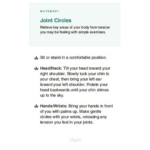
Joint circles—slow, controlled circular movements of the joints—can be a simple yet powerful tool for supporting a dysregulated nervous system. When the joints move gently through their full range of motion, sensory receptors in the muscles, tendons, and joint capsules send continuous feedback to the brain about position and movement. This process, known as proprioception, helps the brain update its map of the body and restore a sense of internal orientation and safety. For individuals experiencing nervous system dysregulation, this steady flow of sensory information can reduce the sense of chaos or disconnection that often accompanies chronic stress or trauma.
Another benefit of joint circles is that they promote calm, rhythmic movement without overwhelming the body. Unlike intense exercise, slow circular motions at the ankles, wrists, hips, shoulders, and neck provide low-threat stimulation that the nervous system can easily integrate. This kind of movement often shifts the body away from a persistent fight-or-flight state and toward a more balanced, regulated state. Because the movements are repetitive and predictable, they can also help reestablish a healthy rhythm between the sympathetic and parasympathetic branches of the nervous system.
Joint circles additionally encourage improved circulation of blood, lymph, and synovial fluid, which supports both physical and neurological health. As the joints move, they gently “pump” fluids through tissues, nourishing cells and removing metabolic waste. This physiological support can reduce bodily tension and stiffness, sensations that often reinforce feelings of threat within the nervous system. Over time, regularly practicing joint circles can help the body relearn ease, mobility, and internal coherence—conditions that make nervous system regulation more accessible.
Brief practice
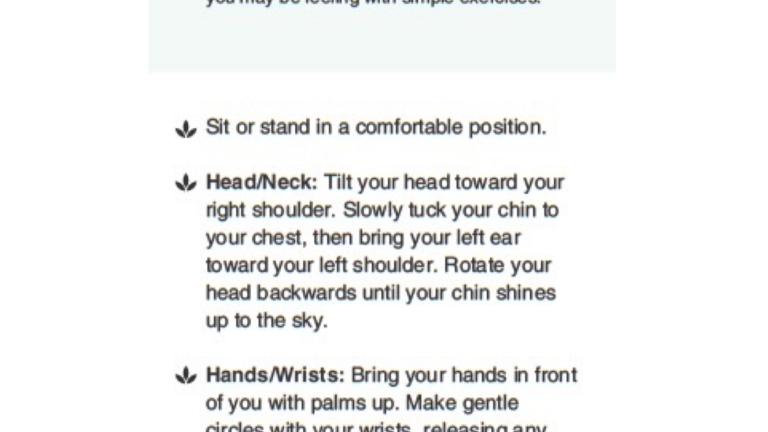
A simple joint-circle practice can be done in just a few minutes and works best when the movements are slow, relaxed, and accompanied by easy breathing. Begin standing or sitting comfortably. Take two or three unhurried breaths and bring your attention into your body. Start with your ankles, lifting one foot slightly and making slow circles with the ankle joint. Move in one direction for five or six circles, noticing the sensations in the joint, then reverse direction. Repeat with the other ankle.
Next move gradually upward through the body. Circle the knees gently, either one at a time or together, then make slow circles with the hips, allowing the pelvis to move in a soft, fluid motion. Continue with shoulder circles, rolling the shoulders forward several times and then backward. Let the arms hang loosely so the movement stays relaxed rather than effortful.
Finish with smaller joints. Make slow circles with the wrists, then gently circle the neck, keeping the motion small and comfortable. As you move, keep your breath steady and your attention on the sensations in each joint. The entire practice can take three to five minutes and often leaves the body feeling warmer, looser, and more settled—helping the nervous system shift toward a calmer, more regulated state.
The bucket theory
The bucket theory simplifies understanding symptom reactions with MCAS. Imagine your body as an empty bucket you don’t want to overflow. Reactions to various stimuli fill the histamine bucket at different rates, forming the total histamine level (how full your bucket is). More histamine means more symptoms. By managing triggers, reducing exposures, and taking medications and supplements, you can control your bucket’s level.
Know your typical symptom progression
Understanding your symptom progression during a flare is key to developing your rescue plan. This post discusses how to recognize symptom progression so you can be prepared to address them.
Get my free ebook, symptom log, and meal plan!
Want a tool to easily track your symptoms?
Check out these circadian health tools!
I’m an affiliate with Bon Charge, a company that makes tools for circadian health, and you can receive 15% off your order with my coupon code BETSYL.
Bon Charge offers tools such as yellow– and red-tone blue-blocking glasses, red light therapy devices, PEMF mats, infrared saunas, and EMF-blocking products.
Sign up for the SSP!
I’ve found the Safe and Sound Protocol (SSP) to be the most helpful bottom-up healing strategy if your nervous system has been overloaded with toxic exposures, including mold or non-native EMFs, chronic infections, concussions, stress, or trauma. The SSP is a passive listening therapy based on Polyvagal Theory that helps heal nervous system dysregulation. Many people with MCAS and other chronic conditions have nervous system dysregulation stemming from infections, toxic exposures, concussions, and trauma. The SSP is an easy-to-use app that lets you listen to specially filtered music for 30 minutes each day as part of a 5-hour cycle. Studies show the SSP has a profound effect on mental health and chronic conditions. Here’s a short podcast describing the Safe and Sound Protocol.
You can sign up for the SSP here!
Heal your mind!
While the SSP is a bottom-up, somatic therapy for healing the nervous system, the Sacred Self-Healing Method I offer is a top-down nervous system-healing modality that focuses on cognition, attention, perception, and emotion, using the mind’s higher functions. The SSP and the Sacred Self-Healing Method complement each other and together produce lasting results. Here’s a short podcast on my self-healing practice.
I provide one-on-one in-person and remote chronic illness and caregiver coaching, as well as Sacred Self-Healing Sessions based on the Sacred Self-Healing Method, a proven, novel co-creative healing modality detailed in my Books.
Order my books!
Here’s a short podcast highlighting my five books.
My latest book, Living In The Light: Healing with Forgiveness, Sound, and Light, is all about the tools that have been most helpful for me to heal: forgiveness, sound, through nervous system retraining using the Safe and Sound Protocol, and light, through entraining my circadian rhythm with the energy of the sun. Living In The Light is available here!
Rocks and Roots chronicles my solo backpacking journey on the Superior Hiking Trail and my efforts to overcome nervous system dysregulation, gut dysbiosis, and Mast Cell Activation Syndrome symptoms to complete the 328-mile hike successfully.
The Sacred Self-Healing Method ebook is available here and in most ebook retailers!
The Sacred Self-Healing Workbook is available for purchase here!
Betsy’s first book, Sacred Self-Healing: Finding Peace Through Forgiveness, is available here
Companion Recordings
The companion audio recordings of chants, guided meditations, and sound healing demonstrations that accompany the Sacred Self-Healing Method are available for free on my YouTube channel here
What do you think?
I’d love to have your reply below!
Disclaimer
The preceding material does not constitute medical advice. This information is for information purposes only and is not intended to be a substitute for professional medical advice, diagnosis, cure, or treatment.